
Maldives fly GT
Giant Trevally on the fly in the Maldives – John Kärki's best tips
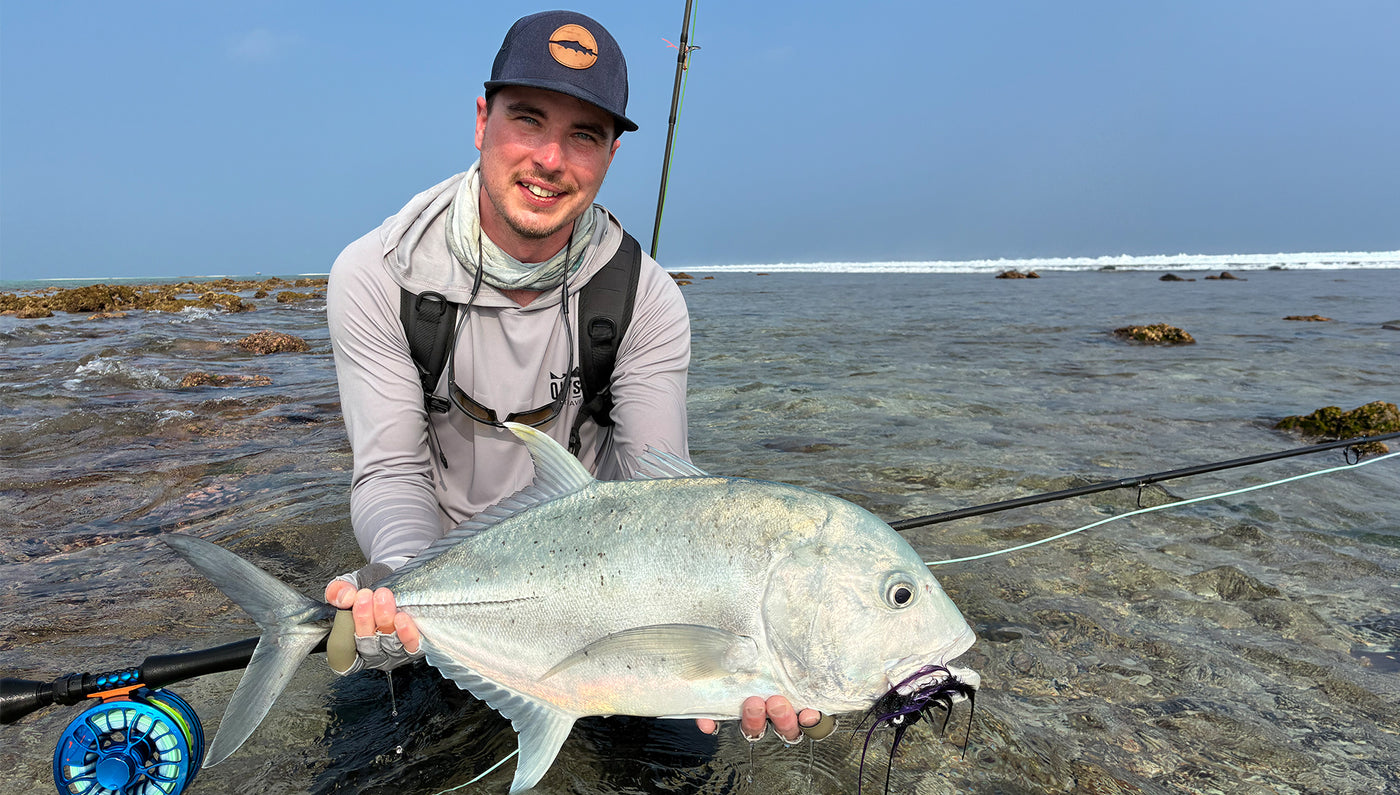
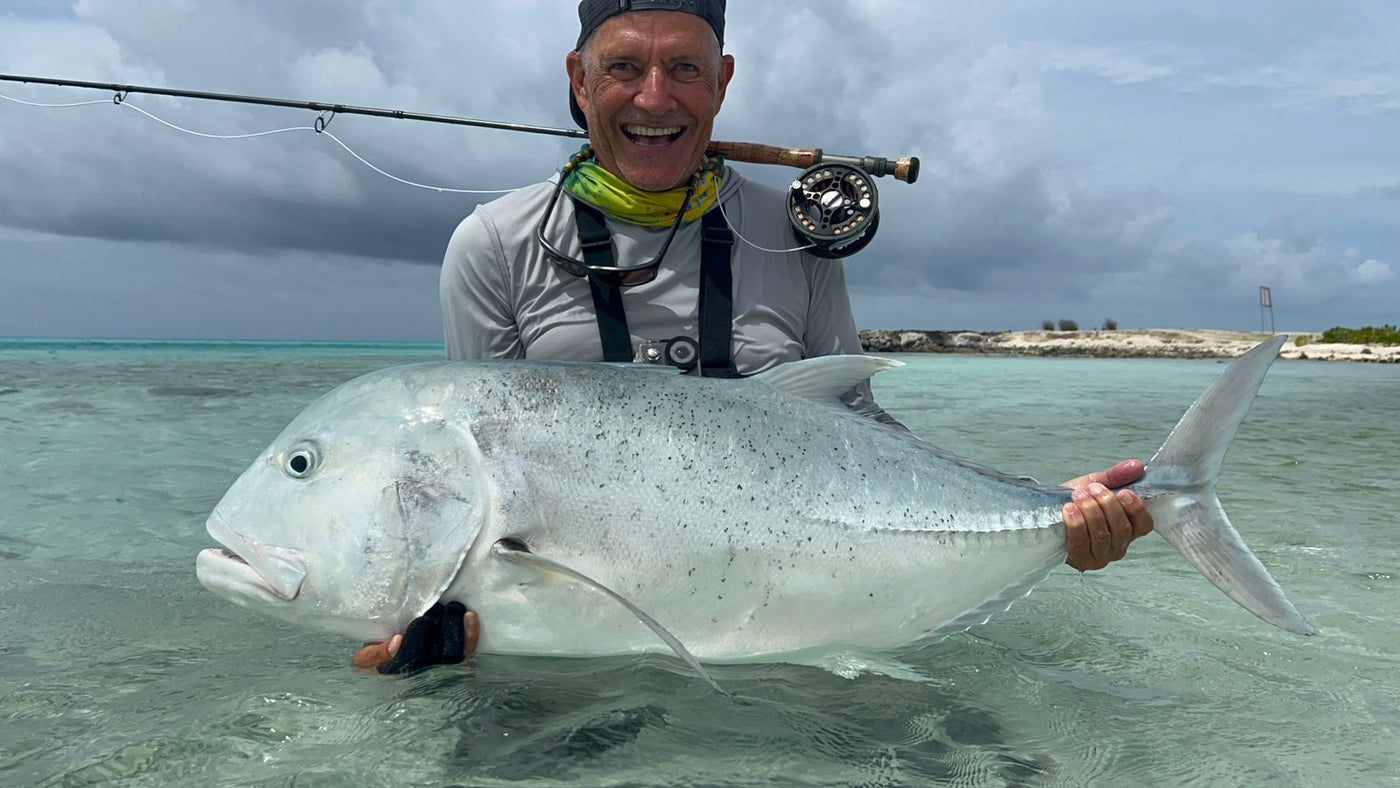
Giant Trevally on the fly in the Maldives is, for many, the ultimate big game in fly fishing. Brutal takes in the surf zone, fish appearing out of nowhere, and fights that test both equipment and mental fortitude to the max. In this article, John Kärki shares his experiences from several trips to the Maldives, with concrete tips on equipment, fly choice, tactics, and what really makes a difference when the dream fish appears in shallow water.
Here we will cover:
- How do you fish for Giant Trevally on the fly in the Maldives?
- What equipment is needed for GT on the fly?
- Which flies work best for Giant Trevally?
- Surf zone, lagoons, and islands – where can you find GT?
- John Kärki's tactics for Giant Trevally on the fly
- How to fight a Giant Trevally
- The mentality behind GT fly fishing
- Common questions about Giant Trevally on the fly
How to Fly Fish for Giant Trevally in the Maldives?
Giant Trevally belongs to the jack family and is a prominent apex predator in the Indian Ocean. There are stories of how they, hunting in groups, cause smaller sharks to leave the reefs. In addition to its aggressive hunting style, the fish also has exceptionally good eyesight and feeds on everything from mullet, bonefish, and other fish to crabs, shrimp, and sometimes even birds.
Over the past decade, more and more fly anglers have started targeting this brutal species. Giant Trevally, GT, Geet, or Gangster of the Flats. A beloved child has many names. Perhaps not so strange. The fish is notorious for breaking rods, snapping fly lines, or straightening saltwater hooks that seem impossibly strong.
For John Kärki, much of the charm lies in the combination of visual fishing and the adrenaline when everything happens in a matter of seconds.
In the surf zone and on the flats, much is about training the eye. How the fish moves along the reef edge, how shadows behave, and how a GT actually stands out when it comes into shallow water. For beginners, it usually takes some time before they learn to spot the fish properly, but after a few days, the eye starts to get used to it, and suddenly, movements become much clearer.
Much of the fishing involves actually seeing the fish and sight-casting towards it. To increase the chances of spotting it, it's often important to have the sun at your back or from the side and try to read the fish's direction of travel before casting.
What equipment is needed for GT on a fly?
This type of fishing places high demands on the equipment and is largely about having a realistic chance of landing the fish when it all happens.
John's basic setup consists of a #12-weight rod together with a large-arbor reel with a strong drag. The fly line is usually a floating line with a 50 lb core and the leader is a single 1 millimeter strand. The backing should be strong, preferably around 0.50 mm or braided line between 0.50–0.60 mm.
It may sound exaggerated to someone who hasn't fished for GT before, but when the bite comes, you quickly realize why the equipment needs to be uncompromising.
The strike is often brutal, and even with heavy equipment, the outcome is far from certain.
What flies work best for Giant Trevally?
Giant Trevally is a pronounced apex predator and eats everything from crabs along the bottom to large mullets moving high in the water column.
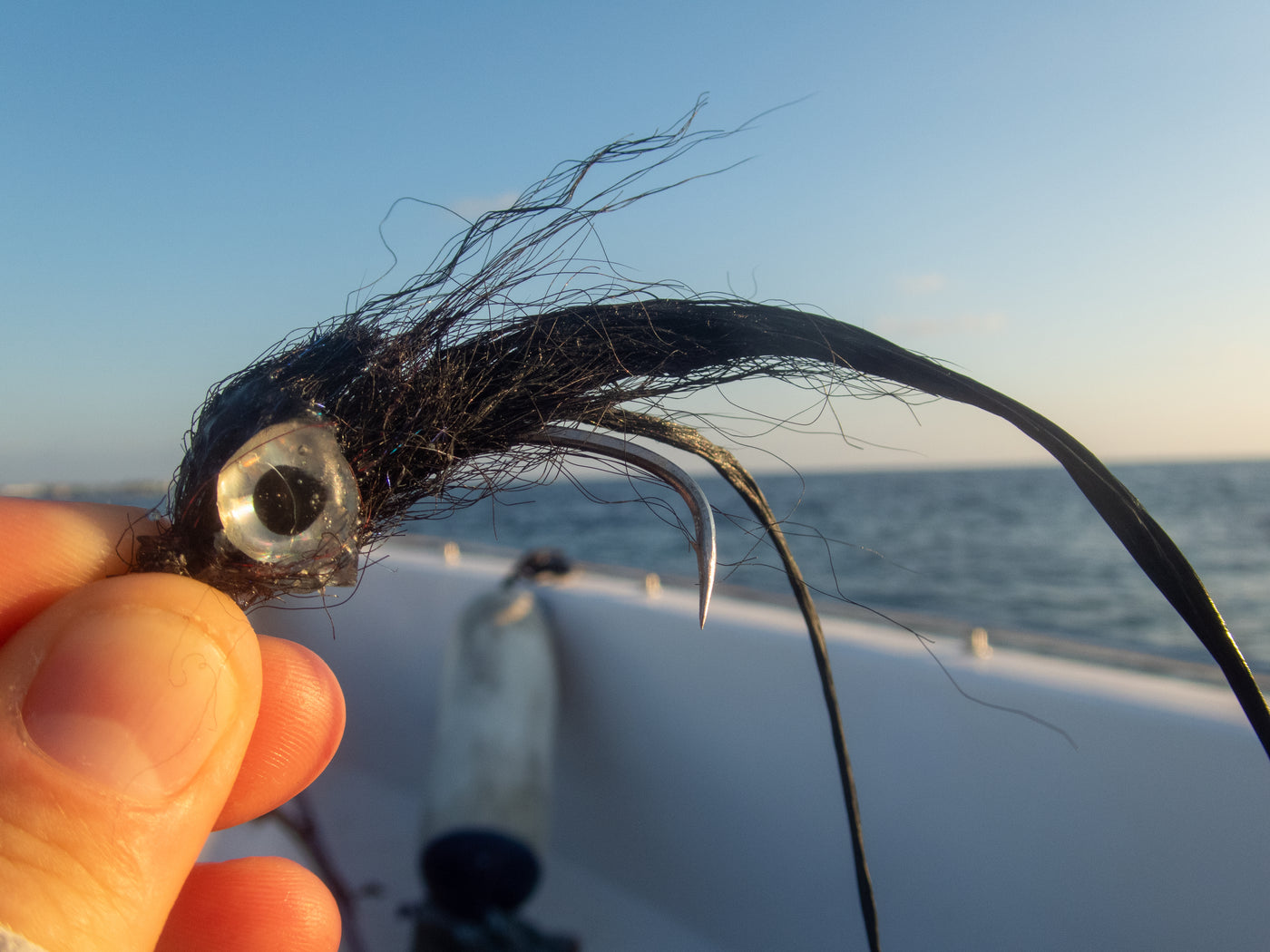
In his own fishing, John mainly uses larger fish imitations between 15–20 centimeters. Colors such as black, purple, and natural tones often work very well. The flies also need to be tied on strong saltwater hooks size 6/0 or larger to prevent hooks from straightening out during the fight.
At the same time, some larger shrimp and crab imitations almost always come along in the box. But John often falls back on the fish imitations that have yielded the most fish over the years.
A simple guideline he uses is to think about the bottom color. Dark flies over dark bottom and surfzone. Lighter flies over sandy bottom in lagoons and on flats.
Surf zone, lagoons and islands – where can you find GT?
Surf zone
Perhaps the most well-known habitat for Giant Trevally in the Maldives is the surf zone, the large reefs facing the open sea where waves break over shallow water.
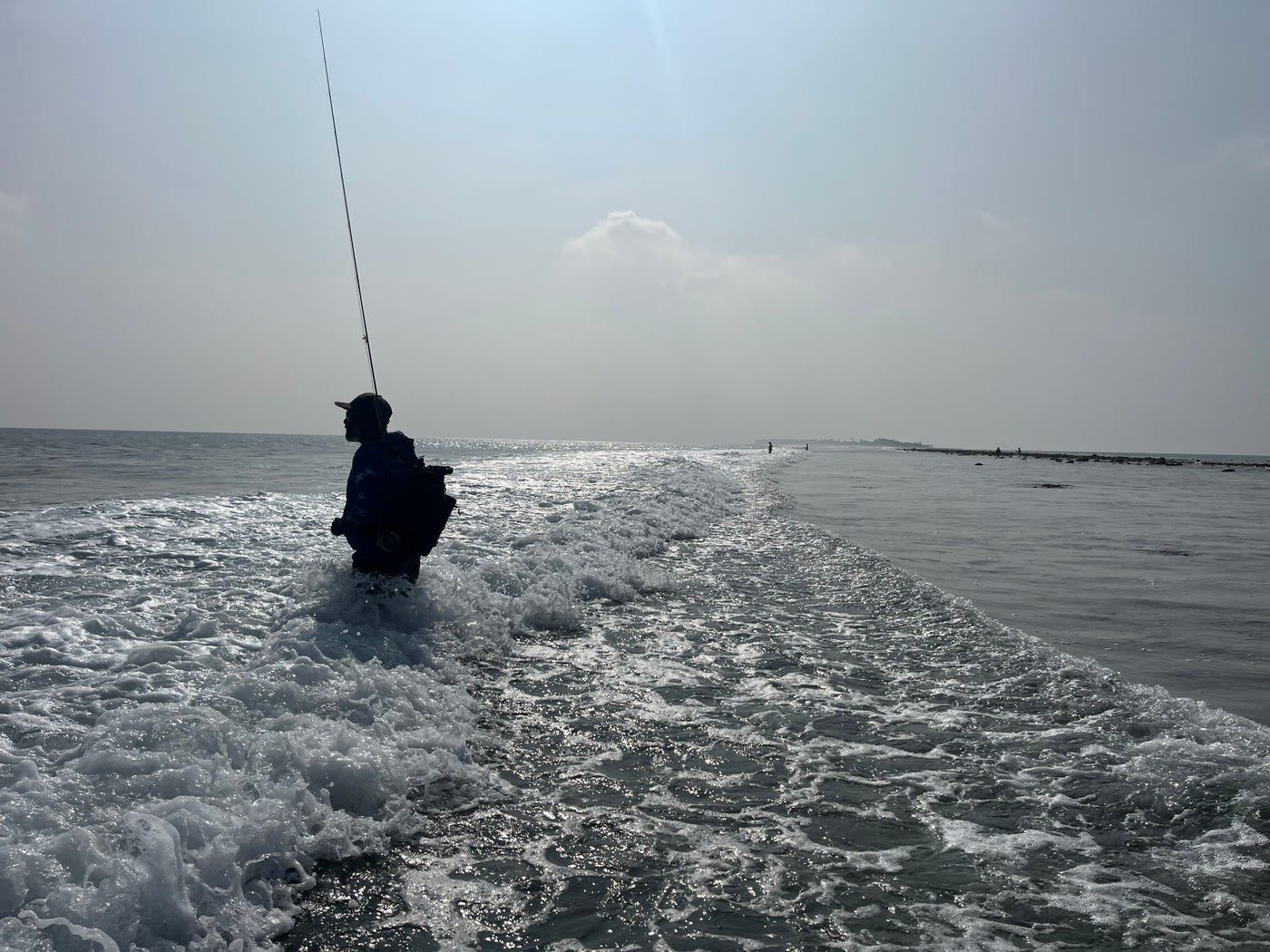
Here, you often wade with the sun at your back, scanning for fish cruising along the reef edge. And believe me, a GT is far from invisible when it approaches with its aggressive attitude. For many, this is one of the most visual and intense experiences a fly fisherman can have.
The fishing demands both physical and mental endurance. Waves constantly crash against the reef while you need to deliver precise casts with a #12-weight rod in tropical heat.
The reason GTs are often found here is quite simple. When waves break against shallow water, a turbulent environment is created where baitfish become disoriented. This is precisely the kind of situation Giant Trevally readily exploit.
Lagoons and flats
We also find GTs in calmer lagoons with pristine white sand where they enter to hunt smaller bonefish and mullet.
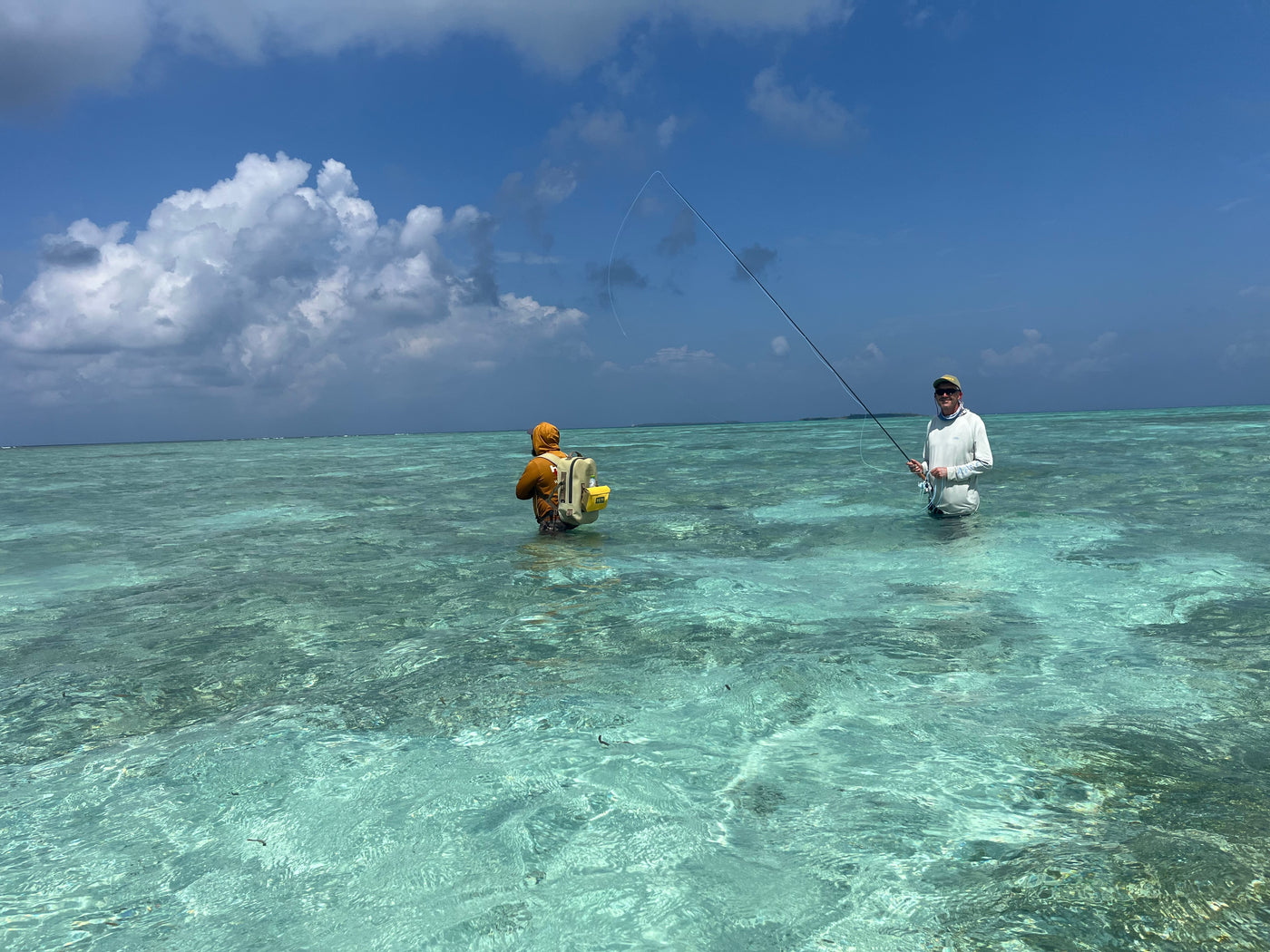
Here, the fishing becomes significantly more visual and at the same time more technical. The fish can be cautious and often shy away from air casts or splashy presentations.
On one of John's recent trips, the group was fishing a large school of bonefish over the sand when a large dark shadow suddenly appeared in the distance.
His pulse immediately quickened.
The #12-weight rod was brought out when it became clear that it was a large GT on the hunt. The bonefish school quickly disappeared as the fish made its presence known, and the cast landed exactly where it should.
Unfortunately, the presentation wasn't good enough. The fish calmly swam away.
Phew...
But such situations are also what makes the fishing addictive.
Islands
Around the islands, we often find bluefin trevally, but at regular intervals, larger Giant Trevally also join the fray. Often, it involves pinpoint casts towards bright sandy spots or smaller vegetation corridors where the fish patrol.
More time with the fly in the water almost always increases the chances, and as John himself says, the fly in the water catches fish after all.
The last tip is really about mentality. Giant Trevally on a fly is challenging fishing, and some days are almost entirely about patience. You won't get every fish to eat, and you won't land every fish that strikes. But when everything aligns and a GT eats the fly in shallow water, it's also hard to compare to much else in fly fishing.
John Kärki's Tactics for Giant Trevally on Fly
Once the fish shows itself, one of the most common mistakes often occurs.
Casting too close.
John instead tries to read the fish's direction of travel and cast in front of the fish, rather than directly at it. Casts of about 20–25 meters are sufficient as long as the presentation is right. The fly should preferably sink for a second before the first retrieve begins so that the fish has time to discover it naturally.
However, when a Giant Trevally reacts, it's important to be decisive in the retrieve. John believes that many people retrieve the fly too slowly. Often, the fish wants the fly to flee, so speed is crucial. He himself likes to retrieve the fly quickly to trigger a strike, and when it works, it sometimes goes from the fish being spotted to everything exploding in just a few seconds.
It's also effective to blind-cast towards structures like large boulders, reef edges, or areas where baitfish gather. John's view on fishing is quite simple. More time with the fly in the water almost always creates more chances, and as he says himself, a fly in the water catches fish after all.
Always Cast Towards Rays
One of John's most concrete tips concerns rays. When larger black rays sweep over shallow areas, Giant Trevally often follow to pick up small fish and shrimp stirred up from the bottom.
It's not uncommon to first see the sand begin to move before the ray itself becomes clear, and sometimes smaller trevallys glitter around, following along. If you see a ray moving onto the flats, it's almost always time to be ready.
How to Fight a Giant Trevally?
Once everything aligns and the fish is hooked, the next part of the challenge begins.
The fight.
There are several schools of thought on how to fight a Giant Trevally, but according to John, the fishing spot often determines how hard you need to go. In the surf zone, the fish usually needs to be pressured immediately because corals and reefs can quickly cut both line and leader. There's rarely much time to be cautious here.
On one of John's recent trips, a GT struck and immediately bolted out towards the open sea. The backing constantly scraped against the reef edge while the fish continued to surge outwards among the waves. Eventually, he had to lock the reel completely to try and stop the fish, but despite that, it continued to take line.
After a few truly nervous minutes, he finally managed to get the fish over the reef edge and land it. Such a situation is hard to let go of and perhaps also part of what makes GT fishing so special.
Around islands and in lagoons, fewer critical moments often arise, and in many situations, the fish can be fought more controlled without the same risk of the line being cut by reefs or coral.
The Mindset Behind GT Fly Fishing
Chasing Giant Trevally on the fly is something many dream of, but it is also a fishery that requires patience.
Long days in tropical heat, strong winds, and heavy rods make some days feel significantly longer than others. You won't get every fish to eat, and you won't land every fish that bites. It's simply part of the fishing.
At the same time, that's precisely why so many get hooked on GT fly fishing. When everything aligns and a large Giant Trevally eats the fly in shallow water, the feeling is hard to compare with much else in fly fishing.
Common questions about Giant Trevally on fly
How difficult is it to catch Giant Trevally on the fly?
How difficult is it to catch Giant Trevally on the fly?
GT on the fly is one of the more challenging forms of fly fishing out there. Often, you'll get few chances per day with fish that are both aggressive and very wary. At the same time, you don't need to be an expert to succeed. With the right guidance, patience, and a few days on the water, many people tend to develop quickly.
What fly fishing gear is recommended for GT on the fly?
What fly fishing gear is recommended for GT on the fly?
For most of the fishing, a 12-weight rod, large-arbor saltwater reel with a strong drag, floating line with a strong core, and a heavy leader are often recommended. The flies are often larger fish imitations between approximately 15–20 cm tied on strong saltwater hooks.
Which flies work best for Giant Trevally?
Which flies work best for Giant Trevally?
Fish imitations are often the first choice. Colours like black, purple, and natural usually work very well. A simple rule of thumb is dark flies over dark bottoms and lighter flies over sandy bottoms in lagoons and on flats.
When do Giant Trevally bite best on a fly?
When do Giant Trevally bite best on a fly?
It varies greatly depending on currents, tides, wind, and how active the fish are on any given day. Many of the best opportunities arise along reef edges, in the surf zone, or when larger rays move into shallow areas, with GT often following close behind.
Do you need to be able to throw far to succeed?
Do you need to be able to throw far to succeed?
Not always. According to John Kärki, a cast of about 20–25 meters is sufficient in many situations. Often, presentation and timing are more important than casting the farthest.
Why does GT follow rays?
Why does GT follow rays?
GTs often use stingrays to help them hunt for food. When the stingray stirs up the sand, small fish, shrimp, and other creatures are dislodged from the bottom, attracting Giant Trevally. Therefore, many GT anglers keep a close eye on stingrays.
Should one fish with dark or light flies for GT?
Should one fish with dark or light flies for GT?
A simple rule of thumb that John Kärki often uses is to match the fly to the bottom. Dark flies often work well over dark bottoms and in the surf zone, while lighter flies usually suit sand bottoms in flats and lagoons better.
Is the surf zone or lagoons best for GT on fly?
Is the surf zone or lagoons best for GT on fly?
Both can be very good, but the fishing differs somewhat. In the surf zone, it often involves aggressive fish along the reef edge where waves and currents create a lot of activity. In lagoons and on flats, the fish are often significantly more cautious, and presentation becomes more important.
How hard should you fight a GT on fly?
How hard should you fight a GT on fly?
It depends a lot on where the fish is hooked. In the surf zone, the fish often needs to be pressured very hard immediately, as coral and reefs can quickly cut the line or leader. In lagoons and around islands, it's often possible to fight a bit more calmly.

Do you want to experience Giant Trevally on the fly yourself?
Fly fishing for GT (Giant Trevally) is something many anglers dream about for a long time before it actually happens. Perhaps precisely because it's difficult, raw, and at the same time completely different from much else in fly fishing.
John's tips are a good place to start. But somewhere, it's also about being there yourself. Feeling your pulse race when a dark shadow suddenly appears along the reef edge and trying to hold your cast together when everything happens in a matter of seconds.
John Kärki also arranges hosted trips with Outside Travels for those who want to experience the fishing firsthand and also get help understanding the tactics, environment, and details that often make a big difference during the week.
If you're curious about how a fishing trip to the Maldives works or want to read more about the arrangements, season, and fishing on site, you can find more information at Outside Travels.