Contact us: +46 313 758 200 • info@outsidetravels.com

Packing list

Packing list Maldives – complete guide for popping and jigging

The Maldives is not really the kind of fishing trip where you want to arrive and realize your gear is too light.

Here, it's about Giant Trevally exploding on poppers along reef edges, tuna suddenly appearing in the middle of your fishing, and dogtooth tuna or grouper testing both your gear and your grit in the depths. One moment you're casting a popper shallow over the reef. A few hours later, you're jigging over deeper water where the next strike could be truly heavy.

This also means that your packing will differ quite a bit from many other tropical fishing trips. Gear that's too light quickly becomes apparent, and if there's a weak point in a hook, split ring, or leader, a larger GT usually finds it pretty quickly. At the same time, it doesn't have to be complicated. With the right basic equipment, you'll go a long way, and our guides are always happy to help with recommendations, both before the trip and on-site, depending on what you want to fish for. In this packing list, we'll go through what's actually worth bringing for a fishing trip to the Maldives, focusing on popping and jigging.

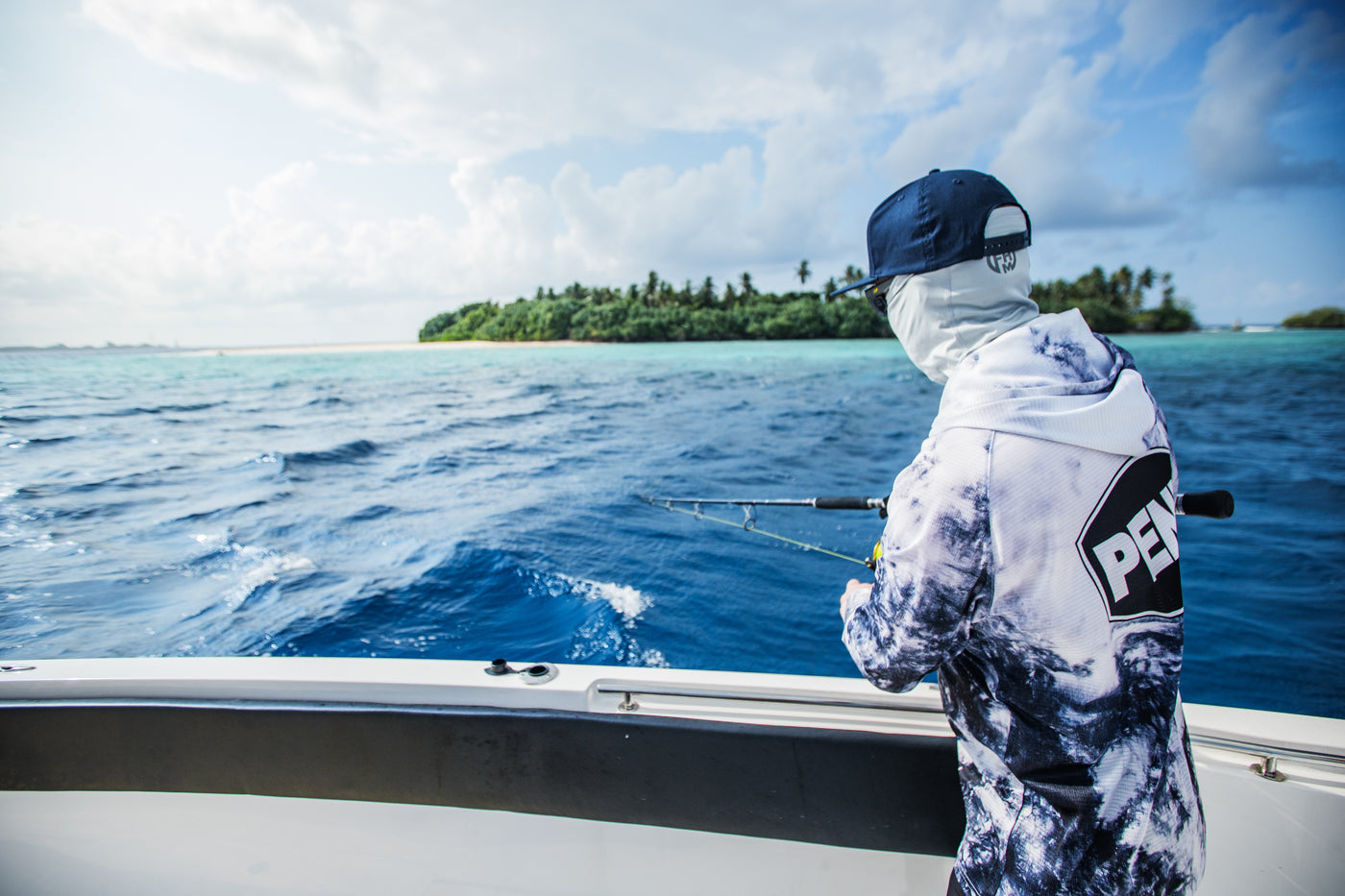
Sportfiskare på Maldiverna har fångat en GT på Popping på en fiskeresa med Outside Travels

What's on site?

A common question before a trip to the Maldives is whether you need to bring all your own equipment.

The short answer is no, it's possible to rent.

When you rent through us, rods, reels, and lines adapted for the local fishing are always included. However, lures, hooks, split rings, leader material, and other small items are not included, as consumption varies greatly between different guests and fishing days.

Many still choose to bring their own equipment, largely for the feeling. If you've found a rod and reel you truly enjoy using, it's hard to leave them at home. At the same time, many appreciate the option of being able to rent and save both space and weight in their luggage.

Fishing takes place from well-equipped 30-foot Axis boats with twin Mercury 150 hp engines. On board there is GPS, sonar, freshwater showers, and plenty of space for up to four anglers plus crew, which makes the days at sea both comfortable and efficient.

Rods

We recommend 3 rods if possible: one for popping, one for stickbaits, and one for jigging. This makes fishing smoother when the guides switch between shallow reef fishing and deeper waters.

For popping, powerful rods between approximately 7-9 feet with casting weights up to about 200 grams work very well. This involves casting larger poppers and stickbaits for Giant Trevally and other strong predatory fish.

For jigging, shorter and more powerful rods are best, adapted for speed jigs and slow jigs between approximately 100-300 grams depending on depth and current strength.

We highly recommend 3-piece rods as they are significantly easier to travel with and more convenient to pack in airline luggage. Today, there are also many excellent travel rods for tropical fishing that perform at least as well as traditional models. If you don't like traveling with large rod tubes or want to travel a bit lighter, we can definitely recommend checking out a modern travel rod.

If you are unsure which setup is best suited, we are happy to help. We have extensive experience in tropical fishing and will gladly assist you in choosing the right equipment for your fishing trip to the Maldives.

Rolls

In the Maldives, the reel is at least as important as the rod. Here you fish for species like Giant Trevally, tuna, and grouper, which often provide brutal runs and quickly put the drag to the test.

We recommend heavy-duty saltwater reels in sizes between 10000–18000 for most fishing. For popping for larger GTs, many choose a slightly heavier setup, while smaller sizes sometimes work well for lighter fishing or certain jigging rigs. The most important thing is not really the size, but that the reel has a smooth and reliable drag and sufficient line capacity for long and tough fights.

Saltwater takes a heavy toll on equipment, so we recommend investing in good quality reels designed for tropical fishing. Many guests also choose to bring an extra reel or spare spool as a backup in case something happens during the week.

If you are unsure which reel is best suited, we are happy to help you find the right setup for your fishing trip to the Maldives.

Leader and trace material

The right line and shock leader make a big difference in the Maldives. Here, it's often about aggressive strikes, sharp reefs, and fish that don't give you much time to react once they decide to bite.

For most fishing, we recommend braided line in PE 6–8. This roughly corresponds to 80–90 lb for PE 6 and 100–120 lb for PE 8. For popping for larger Giant Trevally, many choose a heavier setup, while slightly lighter dimensions sometimes work well for stickbait and certain jigging setups depending on depth and current.

When it comes to shock leaders, we recommend between approximately 150–210 lb depending on the fishing method and how heavy you want to fish. Both fluorocarbon and monofilament work very well, but we often prefer mono a bit more for popping. The slight stretch can be really nice for explosive strikes near the boat and often helps absorb some of the load during the fight.

For jigging, some choose fluorocarbon for feel and abrasion resistance, but a lot also comes down to personal preference.

Baits and jigs – our favorites for the Maldives

In the Maldives, you quickly notice that the right bait makes a big difference. Some days large poppers work best, other days stickbaits are significantly more effective, and sometimes jigging completely saves the fishing. Therefore, we always recommend some variation in size, color, and action.

Poppers 100–200 grams

Poppers are often the main focus when fishing for Giant Trevally along reef edges and shallow areas. Here, we prefer larger models that displace a lot of water and create significant noise on the surface.

Brands and models we often recommend:

• Halco Roosta Popper
• Maria Pop Queen
• DUO Rough Trail Bubbly
• Nomad Chug Norris

Colors like blue/silver, white, pink, and natural colors often work very well in the Maldives.

Stickbaits 15–25 cm

Stickbaits are a great complement to poppers and on some days significantly more effective, especially when the fish are more cautious or don't want to break the surface as aggressively.

Favorites many people like:

• Maria Loaded
• Nomad Madscad
• DUO Rough Trail Aomasa
• Halco Slidog

Blue/silver, white/red, and pink are colors that often produce.

Speed jigs and slow jigs 100–300 grams

For jigging, we recommend several different weights depending on depth and current. Some days lighter jigs are sufficient, while others require significantly heavier models to maintain contact with the fish.

Jigging can be really effective for tuna, grouper, GT, and red snapper.

Colors we often like:

• Silver/blue
• Pink/silver
• Glow in deeper water or low light conditions

We recommend bringing at least 6–10 baits in total. Reefs, large fish, and tough fights put a lot of strain on equipment, and it's good to have alternatives if your favorite bait is lost.

If you don't want to put together your assortment yourself, we're happy to help. At Outside Travels, we often help our guests choose the right baits and equipment for their trip to the Maldives and can also put together ready-made packages if you want to make it easy.

Hooks, split rings and solid rings

In the Maldives, it's often small details that determine whether a fish is landed or not. Here, it's no exaggeration to say that a large GT will quickly find the weakest link in your equipment.

When it comes to hooks, many prefer strong single hooks or high-quality treble hooks depending on fishing style and lure.

Hooks we often recommend:

BKK

• BKK Lone Diablo 5/0–9/0 (very popular for GT popping)
• BKK Lone Diver 5/0–9/0
• BKK GT-Rex Treble 3/0–5/0
• BKK Raptor Z 4/0–7/0 (really strong treble)

Decoy

• Decoy GT Special JS-1 5/0–8/0
• Decoy Plugging Single Heavy 5/0–9/0
• Decoy Y-S82 4/0–6/0 for stickbaits and some poppers

For split rings, we recommend stronger models from brands like BKK or Decoy. It's worth choosing quality here, as the load quickly becomes high when larger fish bite.

When it comes to solid rings, models between approximately 150–250 lb work very well depending on your setup and how heavily you want to fish. Many also use assist cord and pre-tied assist hooks for jigging.

Please bring extra:

• Split rings in sizes 7–9
• Solid rings 150–250 lb
• Assist hooks for jigging
• Spare hooks for poppers and stickbaits
• Shock leader in mono or fluorocarbon 150–210 lb Popping 90lbs- 150lbs jigging
• Extra PE line in case something happens during the trip
• Strong split ring pliers and dehooking pliers
• Fighting gloves

It's much better to have a little too many small items than to be on the last day of fishing and missing what broke the day before.

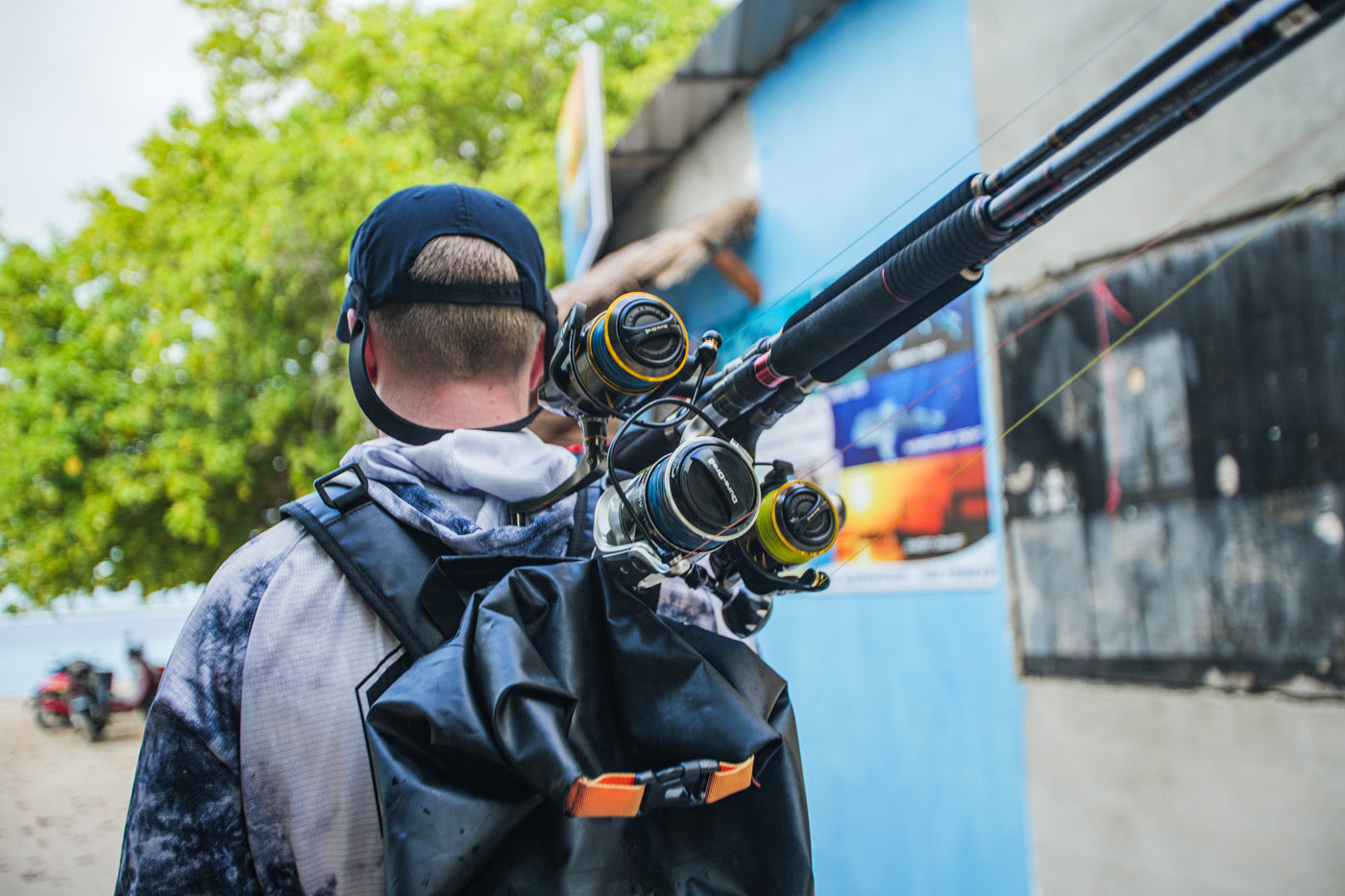
Sportfiskare på tropisk fiskebåt i Maldiverna

Practical information for your trip

It's often the little things that make the biggest difference in the Maldives. Here, long days are spent out on the open sea in strong sun, saltwater, and heat, which means a little extra planning is usually appreciated.

Shoes and protection

A pair of comfortable and non-slip shoes is something we truly recommend. The boat deck quickly gets wet, and during long fishing days, it's nice to stand steadily.

Please also bring:

• Fishing gloves
• Buff with UV protection
• Polarized sunglasses + lens cleaner
• Sunscreen and sun stick SPF 50
• Cap or hat

Healthcare and documents

The Maldives is generally an easy destination to travel to, but a few small things are nice to have in your bag.

We recommend:

• Passport and travel documents
• Mosquito repellent
• Blister plasters
• Rehydration salts
• First Aid Kit (our guides always carry a kit, but having your own is never wrong)
• Any personal medications

Flying with fishing gear

Many choose to travel with their own equipment, but it's also perfectly fine to rent on-site if you want to travel lighter.

If you're traveling with your own rods, we recommend 3-piece travel rods as they are significantly easier to fly with than larger rod tubes. Today, there are also many really good tropical travel rods that perform at least as well as traditional models.

Another tip is to pack lures, hooks, and small items smartly. Saltwater fishing is hard on equipment, and it's nice to have a little extra with you if something needs to be replaced during the week.

If you're unsure what's worth bringing, we're happy to help before your trip. We have extensive experience in tropical fishing and are happy to help put together the right setup based on your fishing style and experience.

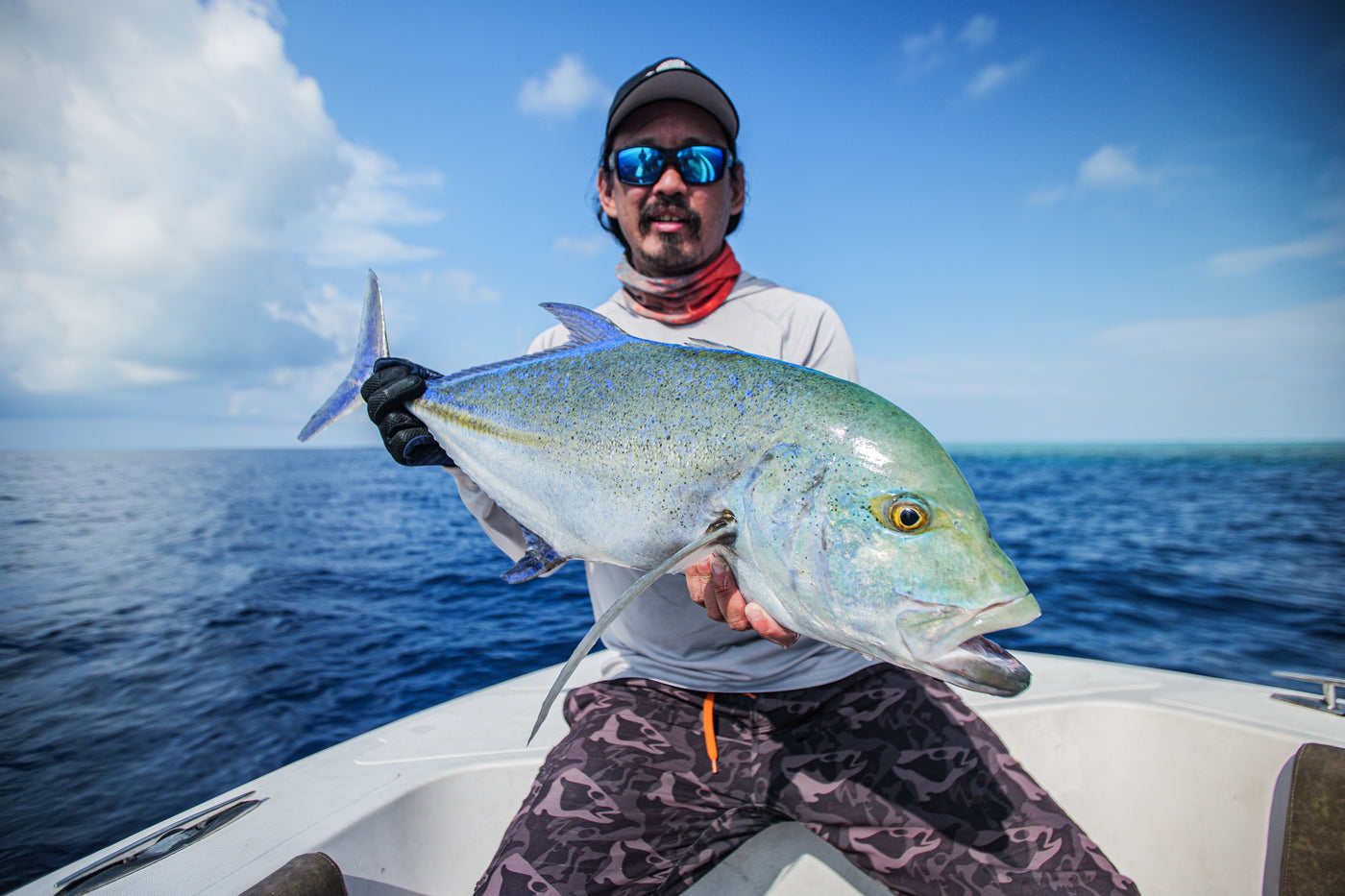
 Bluefin trevally fångad nära revkant på Maldiverna

HERO IMAGE

Common mistakes

After many trips to the Maldives, there are a few things we see quite often. These are rarely major mistakes, but rather small details that make a bigger difference than one might initially think.

1. Too light tackle

It's easy to underestimate how strong the fish actually are in the Maldives. Giant Trevally, tuna, and dogtooth tuna immediately test your gear.

As a baseline, we usually recommend PE 6–8, which roughly corresponds to 80–90 lb for PE 6 and 100–120 lb for PE 8. Many tropical rods are also rated in PE, making it quite easy to see if your rod is suitable for the fishing. A popper rod rated for PE 6–8 often works really well in the Maldives.

For this, we recommend a strong shock leader of about 150–210 lb and good quality hooks.

2. Too few lures and small tackle

Many people bring too few lures the first time. Reefs, tough fights, and big fish take a heavier toll than many realize.

Extra split rings, solid rings, hooks, and leader material take up almost no space but can save several fishing days.

At least 6-10 lures in mixed sizes and colors.

3. Only one reel

Saltwater and heavy strain put a lot of wear and tear on equipment. If possible, we always recommend an extra reel or spare spool. A fairly inexpensive insurance for a trip you've been looking forward to for a long time.

4. Too many clothes

This happens more often than you think.

Many people pack too many regular clothes but too few fishing items. In practice, the same quick-drying garment is often used for most of the week.

5. Underestimating the sun

The equatorial sun is significantly stronger than many people realize, even on cloudy days.

UPF clothing, buffs, gloves, polarized glasses, and plenty of sunscreen quickly become items you're very glad you brought.

If you're unsure about rods, PE size, leader, or lures, we're happy to help before your trip. We often help our guests get their setup right before departure.

Common questions about fishing in the Maldives

Do I need to bring my own equipment to the Maldives?

No, you can rent equipment on site. Through us, it is possible to rent a rod, reel, and line adapted for fishing in the Maldives. Many still choose to bring their own equipment for the experience, especially if they already have a setup they are comfortable with.

What equipment is recommended for Giant Trevally in the Maldives?

For popping for Giant Trevally, we usually recommend rods rated for PE 6–8, heavy-duty saltwater reels in sizes 10000–18000, braided line equivalent to approximately 80–120 lb, and shock leader between 150–210 lb.

How much bait do I need to bring?

We recommend at least 6–10 poppers and stickbaits, as well as a few different jigs between 100–300 grams. Reefs, large fish, and tough fights wear out lures more than many initially think, and it's good to have alternatives.

Do both popping and jigging work on the same fishing trip?

Yes, that's actually one of the things many people like most about the Maldives. One day the focus can be on popping for GT along reef edges, and the next, jigging for tuna, grouper, and dogtooth tuna in deeper waters. The group can somewhat decide this themselves.

Do I need to be experienced to fish in the Maldives?

No, both experienced anglers and people making their first tropical fishing trip usually get along very well. Our local guides have been fishing these waters since childhood and always help with technique, equipment, and approach depending on experience and which species you want to focus on.

What happens if I'm unsure about the equipment?

Just get in touch with us. We'd be happy to help with recommendations for rods, reels, PE line size, leaders, hooks, and lures before your trip so you feel well-prepared for fishing in the Maldives.

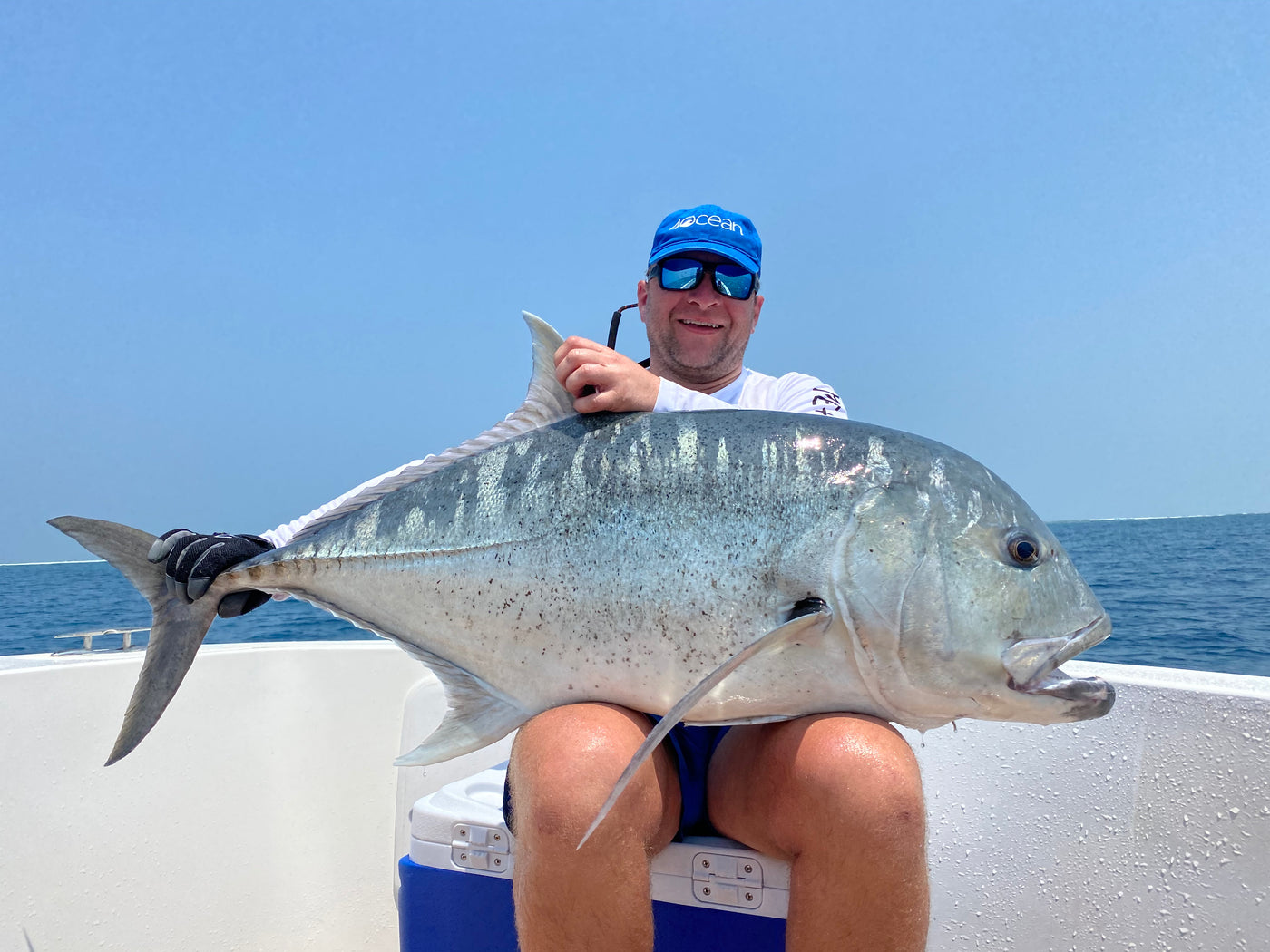
Giant Trevally fångad på popper under fiskeresa till Maldiverna

Do you want to read more about this fishing trip?

This packing list is compiled based on our own trips to the Maldives, experiences from local guides, and conversations with guests who have fished here for many seasons. The aim is to make it a little easier to pack correctly from the start and avoid wondering on-site if something was left at home.

If you want to read more about the setup, season, prices, or how fishing works in the Maldives, more information about our fishing trip can be found here: