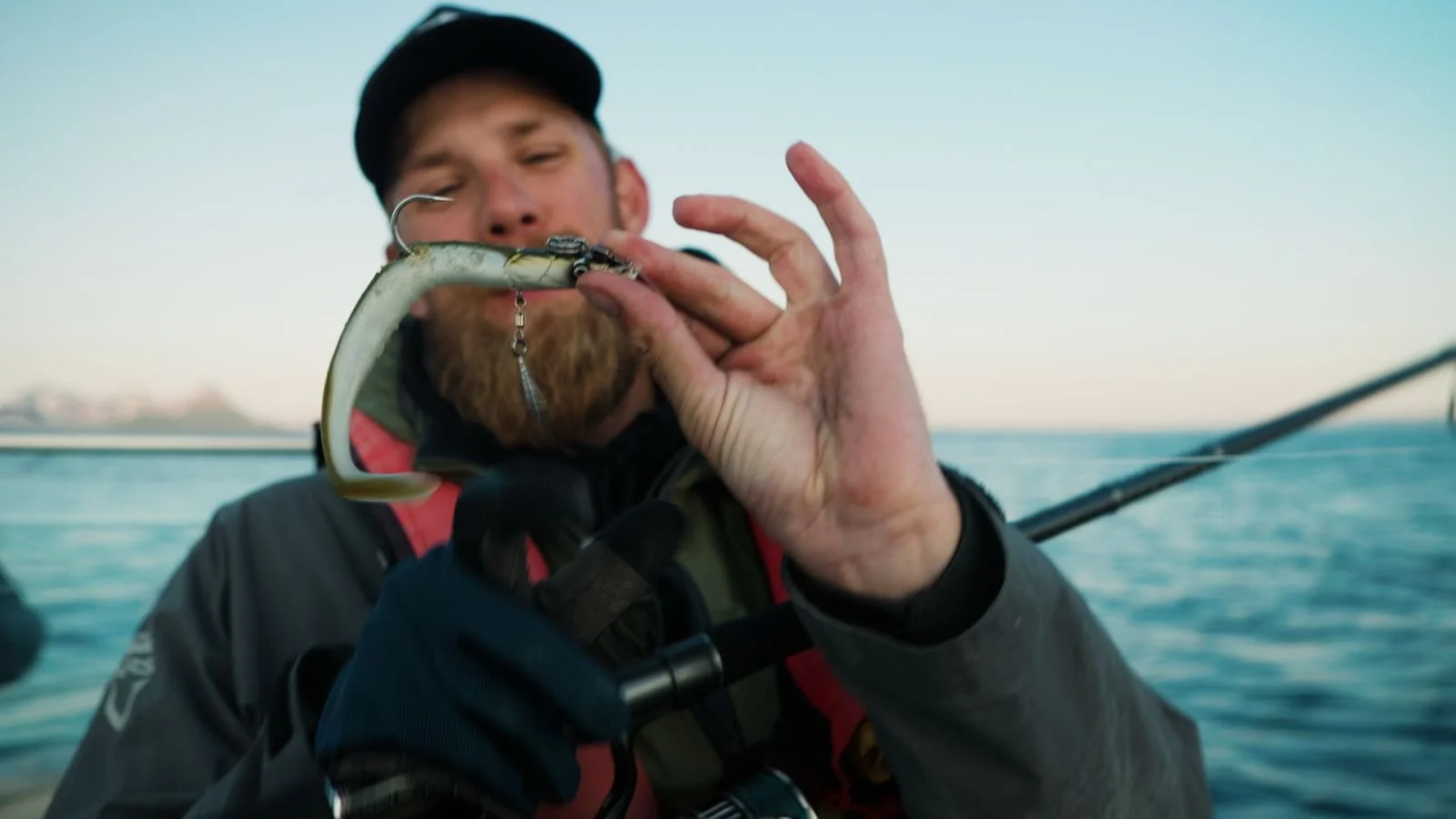
We at Outside Travels recently visited our destination Frovåg Sea Fishing in Northern Norway and tried some really exciting fishing – spin fishing for halibut!
During three intensive days of fishing, we managed to land six halibuts. Several bites came in very shallow water, sometimes as shallow as 10 meters. The fishing was intense, unpredictable, and very similar to pike fishing – but with even heavier resistance!

Halibut caught in shallow water during spin fishing at Frovåg Sea Fishing.
How to fish for halibut with spin fishing
The key to success is to use the nautical chart smartly. We recommend using the Garmin Navionics Boating app with the Relief Shading feature.
There you can clearly see where sandy bottom meets harder structures, where reefs and drop-offs are located, and what the depth contours look like.
Target reefs adjacent to deeper water, preferably between 10 and 20 meters. Extra hot spots are passages where currents are squeezed through "channels" between reefs, where both baitfish and halibut tend to gather.
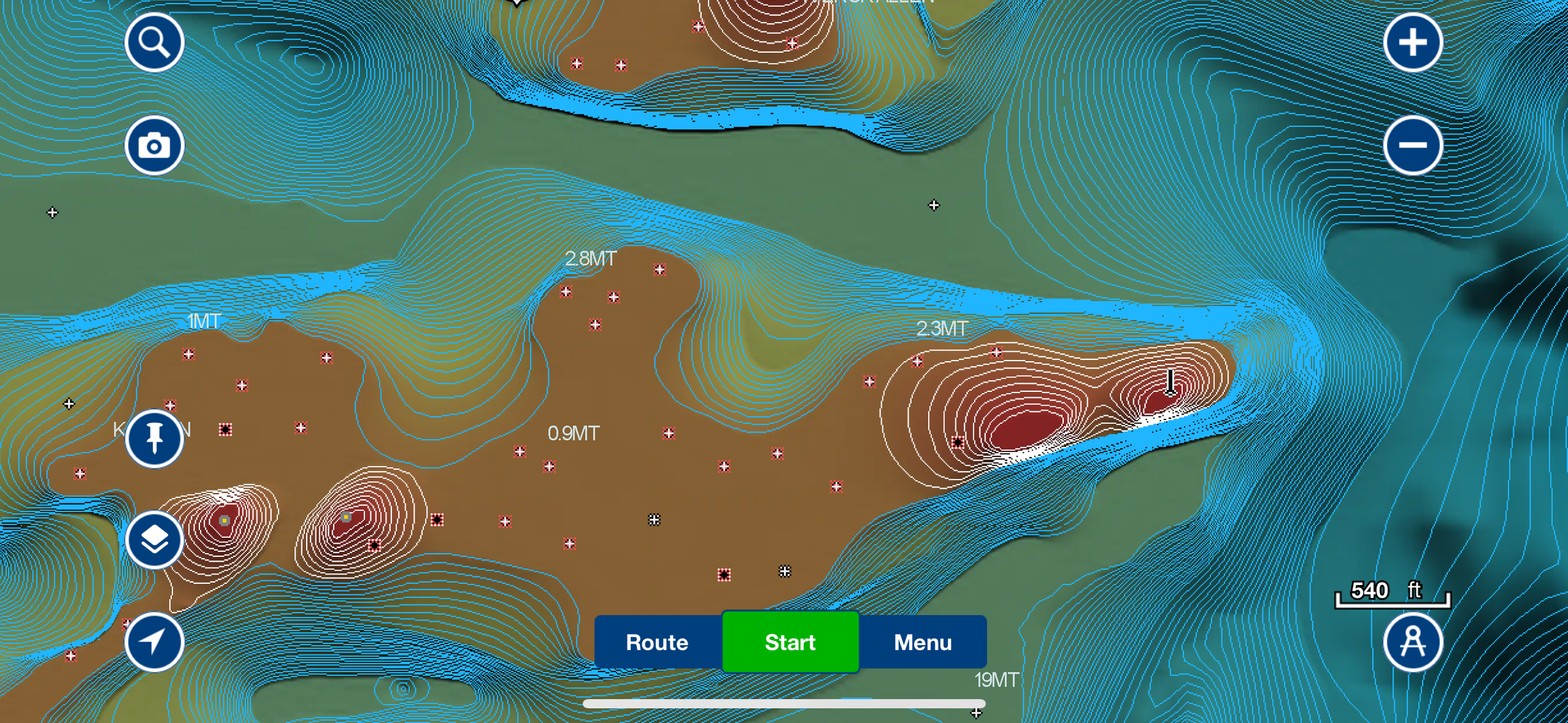
With Garmin Navionics Boating and Relief Shading you can find the halibut's hunting grounds.
Tip: Ebb and flow – the key to right timing
Halibut are strongly affected by currents. When the current is still, fishing tends to be slower. The best time is often just before a current change. Spin fishing makes it possible to cover large areas, perfect when fishing is difficult!
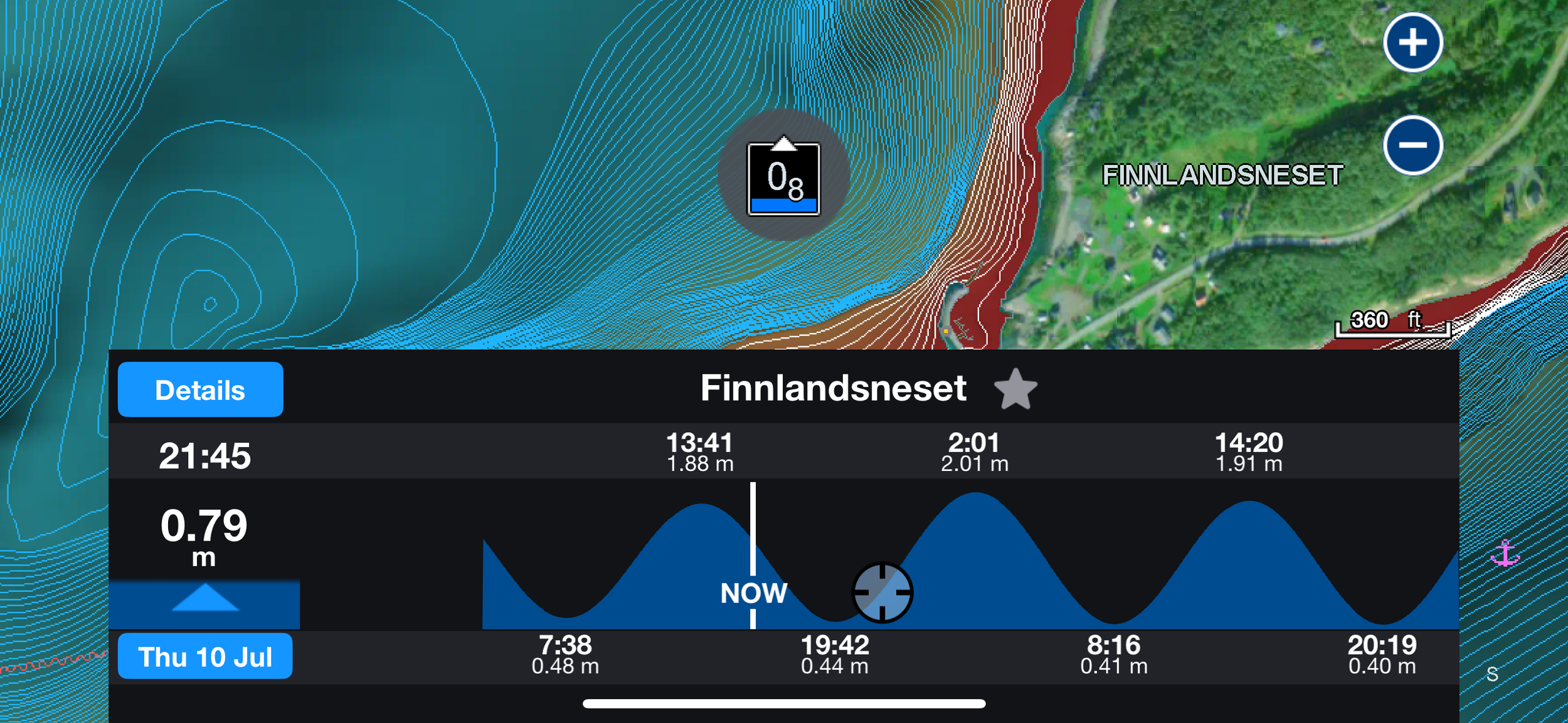
Keep an eye on the currents!
Equipment and lures we used
We fished with lures weighing 50–150 grams and lengths between 10 and 24 cm. This type of fishing is still quite new, so there's a lot to experiment with! I used a spoon underneath to flash. Really hot!
Lures that delivered:
-
Savage Gear Sandeel V2
-
Westin Sandy Andy Jig
The fishing is similar to pike fishing – vary the retrieve speed, use crank pauses, and preferably fish high in the water even in deeper spots.

The best proof of an effective lure – chewed and tested on halibut.
Recommended equipment:
-
Hearty Rise SKWalker Norway Spinning Travel 50-150g (4-piece travel rod)
-
Daiwa Super Kenzaki Spin Travel 120-250g (3-piece travel rod)
-
Reel: DAIWA 20 BG MQ 6000D-H
-
Leader: 150 lbs nylon monofilament
Book your fishing trip to Norway
Do you also want to try this awesome fishing? We offer fishing trips to Norway where you stay right in the middle of the fishing action at our camp Frovåg Sea Fishing – perfect for sea fishing in Norway and halibut.